Easy Homemade Fruit Leather Recipe-Sweet Healthy Treat
Homemade Fruit Leather Recipe is more than just a treat; it’s a vibrant, chewy explosion of pure fruit flavor that transports you back to carefree childhood days. Who doesn’t remember the sheer delight of peeling back that slightly sticky, translucent sheet, savoring the concentrated sweetness of sun-ripened berries or tangy apples? It’s this nostalgic joy, combined with the satisfaction of creating something so wonderfully simple yet intensely delicious, that makes a homemade fruit leather recipe so incredibly appealing. Unlike store-bought versions often laden with added sugars and artificial colors, our homemade fruit leather recipe celebrates the unadulterated goodness of natural ingredients, offering a healthier and infinitely more rewarding snack. Get ready to discover just how easy it is to capture summer’s essence in a perfectly chewy strip!
Homemade Fruit Leather Recipe
There’s something incredibly satisfying about transforming simple fruit into a sweet, chewy, and intensely flavorful treat. Fruit leather is a fantastic way to preserve the taste of summer, use up ripe produce, and create a healthier alternative to store-bought candies. My homemade fruit leather recipe is incredibly versatile, allowing you to experiment with different fruits and flavor combinations. It’s surprisingly easy to make and the results are always a hit with both kids and adults. Plus, it’s a wonderful project to do with children, teaching them about food preparation and patience.
This recipe is designed to be straightforward, requiring minimal special equipment. The key is to cook down the fruit until it’s soft and then dehydrate it to that perfect chewy consistency. The sweetness can be adjusted based on your fruit’s natural sugar content and your personal preference, and the lemon juice adds a touch of brightness that really makes the fruit flavors pop. Let’s get started on making your own delicious fruit leather!
Ingredients:
Preparing Your Fruit
The first step to amazing fruit leather is choosing and preparing your fruit. I highly recommend using ripe, in-season fruit for the best flavor and natural sweetness. Berries like strawberries, raspberries, and blueberries work wonderfully. Stone fruits such as peaches, nectarines, and plums are also excellent choices, as are apples and pears. If you’re using apples or pears, you’ll want to peel them and core them before chopping. For softer fruits like berries or peeled peaches, simply chop them into roughly uniform pieces. This ensures even cooking and pureeing. You can even combine different fruits for unique flavor profiles – think strawberry-rhubarb or mango-peach! The quantity of 2 cups, once chopped, will yield a good batch of fruit leather.
Cooking the Fruit Base
Once your fruit is prepped, it’s time to start cooking. This phase softens the fruit and begin extracts the process of concentrating its flavor. Place your chopped fruit into a medium saucepan. Add the 3 tablespoons of white sugar. The sugar not only adds sweetness but also helps to preserve the fruit leather and contributes to its chewy texture. If your fruit is particularly tart, you might consider adding an extra tablespoon of sugar, but start with 3 and taste as you go. Finally, add the juice from half a lemon. The lemon juice is crucial. It brightens the fruit’s natural flavors, prevents it from becoming overly sweet, and acts as a natural preservative, enhancing the shelf life of your finished product.
Simmering to Perfection
Now, we’ll gently cook the fruit mixture. Place the saucepan over medium heat. Stir the fruit, sugar, and lemon juice together. As the fruit begin extracts to heat up, it will release its natural juices. Bring the mixture to a gentle simmer, then reduce the heat to low. Cover the saucepan and let it cook for about 15-20 minutes, or until the fruit is very soft and has broken down significantly. Stir occasionally to prevent sticking. You want the fruit to be tender enough to easily mash with a fork. This slow simmering allows the flavors to meld and intensify. If you notice it’s getting too dry, you can add a tablespoon or two of water, but usually, the fruit’s own juices are sufficient.
Pureeing for a Smooth Texture
After simmering, you’ll have a wonderfully soft, fragrant fruit mixture. For a smooth fruit leather, you’ll need to puree this mixture. You can use an immersion blender directly in the saucepan for a quick and easy puree. Alternatively, you can carefully transfer the cooked fruit to a regular blender or a food processor. Blend until the mixture is completely smooth and free of any chunks. If you prefer a slightly textured fruit leather, you can skip this step or pulse the blender a few times for a chunkier consistency. For an extra smooth finish, you can press the puree through a fine-mesh sieve, though this is usually not necessary for fruit leather. The consistency should be like a thick applesauce.
Dehydrating the Fruit Leather
This is where the magic happens! You have a few options for dehydrating your fruit puree.
Oven Dehydrating Method:
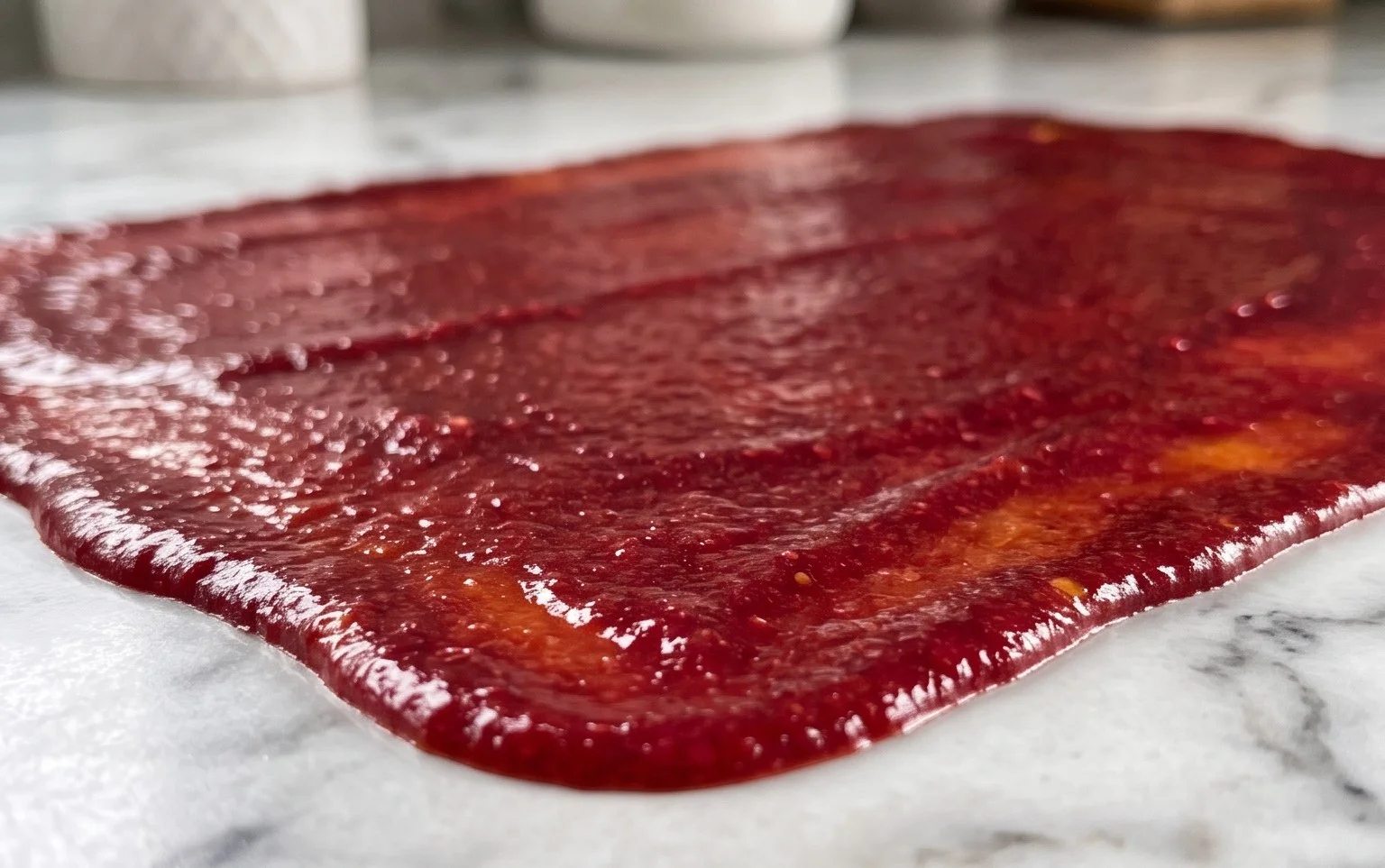
Preheat your oven to its lowest setting, typically around 170°F (77°C). Line a baking sheet with parchment paper or a silicone baking mat. Spread the fruit puree evenly onto the prepared baking sheet, about ¼ inch thick. You want a consistent thickness so that it dries evenly. Try to spread it as thinly as possible without creating holes. Once spread, place the baking sheet in the preheated oven. Leave the oven door slightly ajar (you can prop it open with a wooden spoon) to allow moisture to escape. This is crucial for proper dehydration. Let it bake for 6-8 hours, or until the fruit leather is no longer sticky to the touch but is pliable and chewy. The exact time will vary depending on your oven and the thickness of your fruit leather. Check it periodically, especially during the last few hours.
Food Dehydrator Method:
If you have a food dehydrator, this is an excellent tool for making fruit leather. Prepare your dehydrator trays by lining them with fruit leather sheets or parchment paper. Spread the fruit puree evenly onto the lined trays, about ¼ inch thick. Place the trays in your dehydrator and set the temperature to around 135°F (57°C). Dehydrate for 6-10 hours, or until the fruit leather reaches your desired consistency. Again, check for pliability and chegrape juicess.
Cooling and Storing Your Creation
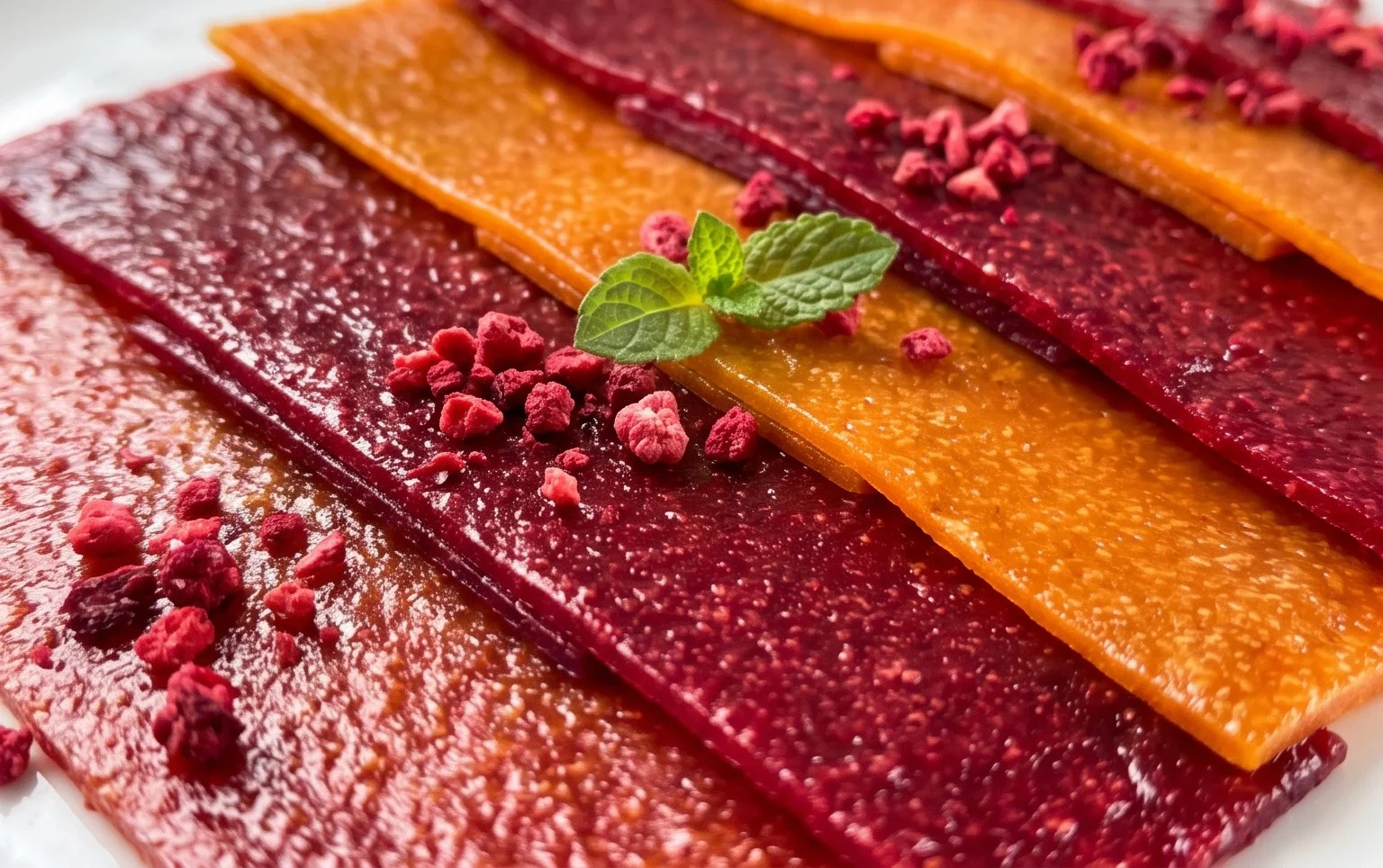
Once your fruit leather is fully dehydrated and feels leathery and slightly sticky but not wet, carefully remove it from the oven or dehydrator. Let it cool completely on the baking sheet or dehydrator tray. As it cools, it will firm up slightly. Once cooled, you can cut it into strips or squares using a sharp knife or pizza cutter. For storage, you can wrap individual pieces in parchment paper or plastic wrap and then place them in an airtight container. Homemade fruit leather can be stored at room temperature for about 2-3 weeks, or longer if refrigerated. If you live in a humid climate, refrigeration is recommended to prevent mold. Enjoy your delicious, homemade fruit leather!
Conclusion:
There you have it – a simple yet incredibly rewarding way to make your own delicious homemade fruit leather! This recipe is fantastic because it allows you to control the ingredients, ditching the preservatives and excessive sugar often found in store-bought versions. You get pure, vibrant fruit flavor in a chewy, satisfying treat that’s perfect for lunchboxes, hikes, or a guilt-free snack anytime. The versatility is a huge plus; feel free to experiment with different fruit combinations to discover your favorites. Making fruit leather is a wonderful way to use up seasonal produce and create something special for yourself and your loved ones. I truly encourage you to give this homemade fruit leather recipe a try – you might be surprised at how easy and delightful it is!
Frequently Asked Questions:
Can I use any fruit for fruit leather?
Absolutely! While berries and stone fruits like peaches and plums are popular choices, you can use almost any fruit. Applesauce, kiwi, mango, and even pureed melon work wonderfully. Just ensure your fruit is ripe for the best flavor and natural sweetness. Be mindful that some fruits might require a little extra cooking time or a touch of added liquid if they are less juicy.
How long does homemade fruit leather last?
When stored properly, your homemade fruit leather can last for up to a month at room temperature, or even longer if refrigerated. Ensure it’s completely cooled and wrapped tightly in plastic wrap or placed in an airtight container. If you notice any signs of mold or an off smell, it’s best to discard it.
Can I make fruit leather without a dehydrator?
Yes, you can! As described in the recipe, the oven is a great alternative. You can also use a food dehydrator if you have one. The key is a low temperature and good air circulation to ensure even drying without cooking the fruit. Patience is key with either method!
Homemade Fruit Leather
A simple and delicious recipe for making your own fruit leather at home with fresh fruit, sugar, and lemon juice.
Ingredients
-
2 cups fruit, chopped
-
3 tbsp white sugar
-
½ whole lemon, just the juice
-
1 tsp vanilla extract
-
¼ tsp cinnamon
Instructions
-
Step 1
Combine chopped fruit and white sugar in a saucepan. -
Step 2
Cook over medium heat, stirring occasionally, until the fruit is soft and has released its juices, about 10-15 minutes. -
Step 3
Remove from heat and stir in lemon juice, vanilla extract, and cinnamon. -
Step 4
Puree the mixture until smooth using an immersion blender or a regular blender. -
Step 5
Pour the puree onto a baking sheet lined with parchment paper or a silicone baking mat, spreading it into a thin, even layer. -
Step 6
Bake in a preheated oven at 175°F (80°C) for 4-6 hours, or until the fruit leather is no longer sticky to the touch. The time will vary depending on the thickness and moisture content of your fruit. -
Step 7
Let cool completely, then cut into strips or shapes.
Important Information
Nutrition Facts (Per Serving)
It is important to consider this information as approximate and not to use it as definitive health advice.
Allergy Information
Please check ingredients for potential allergens and consult a health professional if in doubt.