Italian Pot Roast – Tender Stracotto Recipe
Italian Pot Roast, or Stracotto, is the ultimate comfort food experience, a dish that whispers of family gatherings and slow, happy afternoons. Imagin extracte tender, fall-apart beef, braised for hours until it’s impossibly succulent, infused with the rich aromas of grape juice, herbs, and aromatic vegetables. This isn’t just any pot roast; stracotto is an Italian culinary treasure, a testament to the magic that happens when simple, quality ingredients are given the time and love they deserve.
What makes Italian Pot Roast so beloved? It’s the unparalleled depth of flavor, the luxurious texture, and the sheer satisfaction of a meal that feels both rustic and elegant. The secret lies in the slow cooking process, transforming a humble cut of meat into something truly extraordinary. We’ll guide you through creating your own masterpiece of stracotto, a dish that will undoubtedly become a cherished part of your culinary repertoire. Get ready to impress your family and friends with this authentic Italian Pot Roast!
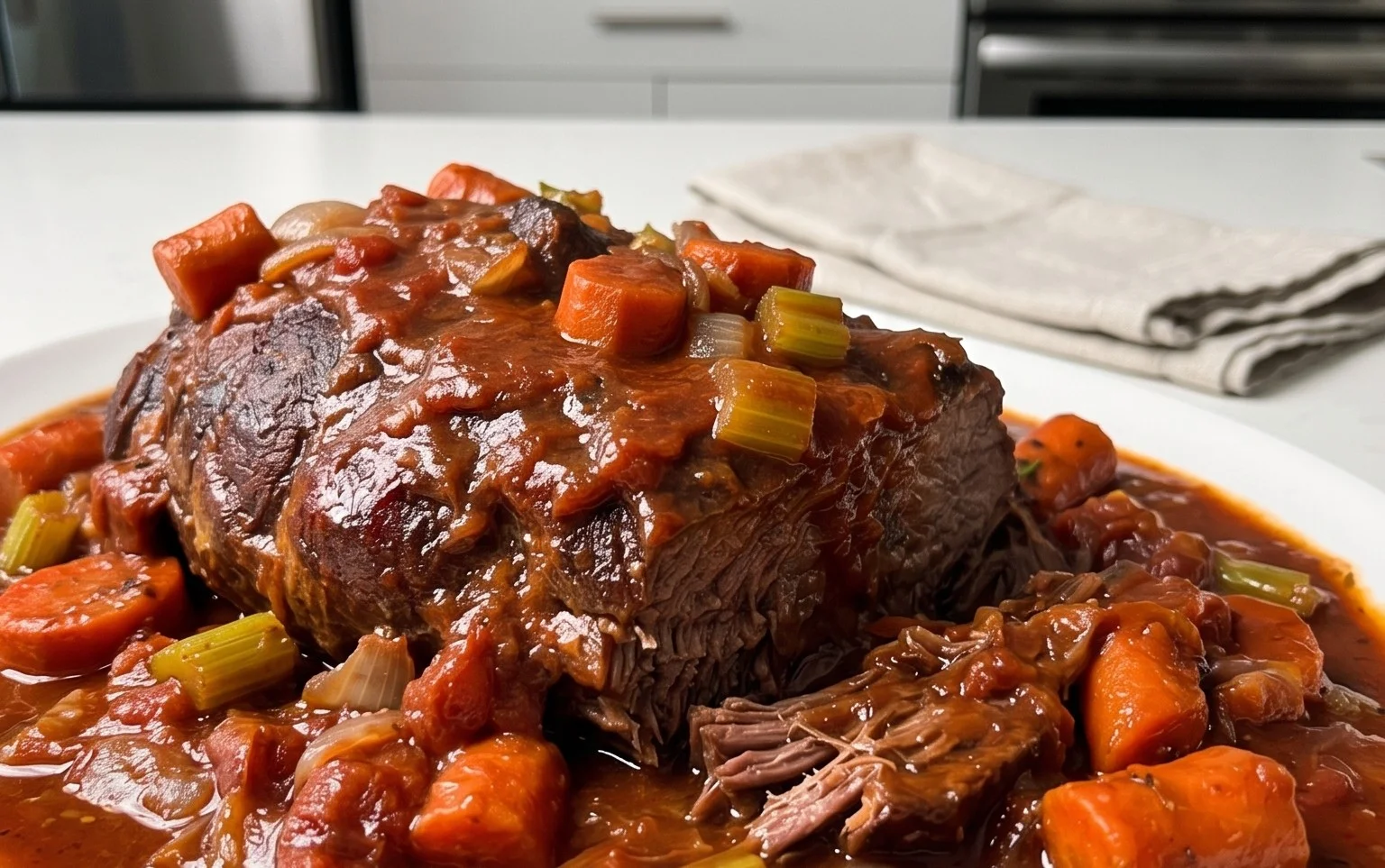
Italian Pot Roast (Stracotto)
There’s something deeply comforting about a slow-cooked meal, and my Italian Pot Roast, or Stracotto as it’s known in Italy, is pure culinary soul food. This isn’t your everyday pot roast; it’s a dish infused with the rich, savory flavors of slow-braised beef, aromatic vegetables, and a hint of Italian herbs. The beauty of Stracotto lies in its simplicity and the incredible depth of flavor that develops over hours of gentle cooking. It transforms a humble cut of beef into something truly spectacular, meltingly tender and wonderfully satisfying. Perfect for a Sunday supper or a special family gathering, this recipe is designed to be approachable yet deliver restaurant-quality results. Let’s get started on this flavorful journey!
Ingredients:
Getting Started: Preparing the Beef
The foundation of a great pot roast is the beef itself. I like to use beef chuck for its excellent marbling, which breaks down beautifully during the long cooking process, resulting in incredibly tender meat. Before we do anything else, pat your beef pieces thoroughly dry with paper towels. This is a crucial step for achieving a good sear, which adds a wonderful layer of flavor to the finished dish. Season generously on all sides with salt and freshly ground black pepper. Don’t be shy with the seasoning; the beef needs it to stand up to the other flavors.
Building the Flavor Base
Now, let’s get that gorgeous flavor base going. If you’re using the beef beef bacon or beef pancetta, place it in a large Dutch oven or heavy-bottomed pot over medium heat. Cook, stirring occasionally, until it’s rendered its fat and is nicely crisped. This crispy beef bacon can be removed and set aside for later, or enjoyed as a tasty little snack (I won’t tell!). The rendered fat is liquid gold, so leave it in the pot. If you’re not using beef bacon, add a tablespoon or two of olive oil to the pot.
Searing the Beef
Increase the heat to medium-high. Carefully add the seasoned beef pieces to the hot pot, making sure not to overcrowd it. You might need to sear the beef in batches. Sear each side until a deep, golden-brown crust forms, which usually takes about 3-4 minutes per side. This searing process, also known as the Maillard reaction, is what develops that rich, savory flavor that makes pot roast so irresistible. Once all the beef is seared, remove it from the pot and set it aside with the vegetables.
Aromatic Foundation and Braising Liquid
In the same pot, reduce the heat to medium. Add the diced onion, carrot, and celery. Sauté the vegetables for about 5-7 minutes, stirring occasionally, until they begin extract to soften and release their sweet aromas. This trio of vegetables, often called a “soffritto” in Italian cooking, forms the aromatic backbone of our Stracotto. Add the chopped garlic and red pepper flakes (if using) and cook for another minute until fragrant. Be careful not to burn the garlic.
Now, it’s time to deglaze the pot and create our braising liquid. Pour in the beef broth and scrape up any browned bits stuck to the bottom of the pot – these are packed with flavor! Add the crushed tomatoes, chopped thyme, rosemary, Italian seasoning, and bay leaves. Stir everything together to combine. Taste the liquid and add a pinch more salt and pepper if needed, keeping in mind that the beef will also contribute saltiness.
The Slow Braise: Patience is a Virtue
Return the seared beef pieces to the pot, nestling them into the liquid and vegetables. The liquid should come about halfway to two-thirds of the way up the sides of the beef. If it doesn’t, you can add a little more beef broth or even some water. Bring the liquid to a gentle simmer, then reduce the heat to low, cover the pot tightly, and let it braise. For the most tender and flavorful results, I like to braise this for at least 3 to 4 hours, or until the beef is fork-tender and shreds easily. You can also do this in a preheated oven at 300°F (150°C) for the same amount of time. The low and slow cooking is key to breaking down the connective tissues in the beef, making it incredibly succulent.
Finishing Touches and Serving
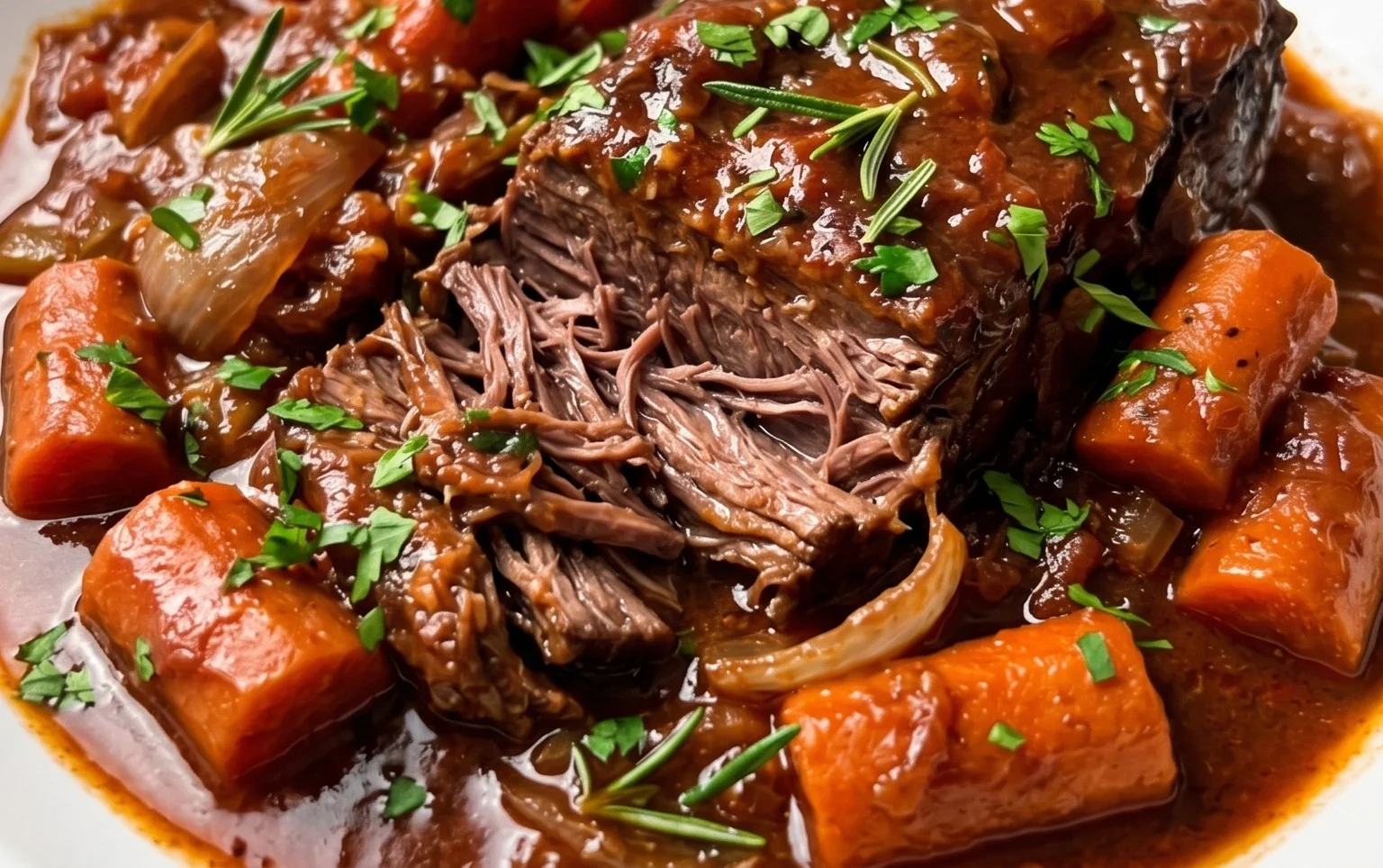
Once the pot roast is fall-apart tender, carefully remove the beef from the pot and place it on a cutting board. If you reserved the crispy beef bacon, you can sprinkle it over the top now. You can shred the beef with two forks or slice it against the grain.
The sauce in the pot is where so much of that incredible flavor resides. You can serve it as is, or for a slightly richer sauce, you can skim off any excess fat from the surface. If you want to thicken it slightly, you can simmer it uncovered for a few more minutes to reduce, or whisk together a tablespoon of cornstarch with two tablespoons of cold water and stir it into the simmering sauce until it thickens. Remove and discard the bay leaves before serving. My favorite way to serve this is ladled generously over creamy polenta, mashed potatoes, or even a crusty bread to soak up all that delicious sauce. Enjoy every comforting bite!
Conclusion:
So there you have it – a truly magnificent Italian Pot Roast, or Stracotto, that promises comfort and incredible flavor with every tender, slow-cooked bite. This recipe is a celebration of simple, quality ingredients transformed into something truly special. It’s forgiving, deeply satisfying, and the aroma that fills your kitchen as it simmers is an experience in itself. This Stracotto isn’t just a meal; it’s an invitation to gather around the table and enjoy good company and even better food. I truly encourage you to give this a try!
Serve your Italian Pot Roast generously with creamy mashed potatoes to soak up all that rich, savory sauce, or alongside some crusty bread for dipping. Roasted root vegetables like carrots and parsnips are also a perfect accompaniment, adding earthy sweetness. For a touch of Italian authenticity, consider polenta. Feeling adventurous? You can easily adapt this Stracotto. Consider adding mushrooms along with the aromatics for an extra layer of umami, or a splash of balsamic vinegar in the braising liquid for a subtle tang.
Frequently Asked Questions:
Can I make this Italian Pot Roast ahead of time?
Absolutely! In fact, Stracotto often tastes even better the next day. Let it cool completely, then store it in an airtight container in the refrigerator. Reheat gently on the stovetop or in the oven until warmed through. This makes it an excellent option for meal prepping or for hosting guests with less stress on the day.
What cut of beef is best for Stracotto?
For this Italian Pot Roast, tougher, well-marbled cuts of beef are ideal as they become incredibly tender and flavorful with slow cooking. Chuck roast, brisket, or even short ribs are excellent choices. Avoid lean cuts like sirloin, as they can become dry and tough during the long braising process.
My Stracotto sauce seems a little thin. What can I do?
No worries! If your braising liquid is thinner than you’d like after cooking, simply remove the meat and vegetables from the pot, then simmer the liquid over medium-high heat until it reduces and thickens to your desired consistency. You can also whisk in a slurry of cornstarch or flour mixed with a little water, and then simmer until thickened.
Italian Pot Roast (Stracotto)
A slow-cooked, tender Italian-style beef roast infused with aromatic vegetables and herbs.
Ingredients
-
4 ounces beef bacon (or beef pancetta), diced
-
3 pounds beef (such as chuck), cut into 3 large pieces
-
salt and pepper to taste
-
1 cup onion, diced
-
1 cup carrot, diced
-
1 cup celery, diced
-
1 tablespoon garlic, chopped
-
2 cups beef broth
-
1 (14.5 ounce) can crushed tomatoes
-
1 teaspoon thyme, chopped
-
1 teaspoon rosemary, chopped
-
1 teaspoon Italian seasoning
-
2 bay leaves
Instructions
-
Step 1
Pat the beef dry and season generously with salt and pepper. -
Step 2
In a large Dutch oven or heavy-bottomed pot over medium-high heat, cook the beef bacon (if using) until crispy. Remove bacon and set aside, leaving the rendered fat in the pot. -
Step 3
Sear the beef pieces in the hot fat on all sides until deeply browned. Remove beef from the pot and set aside. -
Step 4
Add the diced onion, carrot, and celery to the pot. Cook, stirring occasionally, until softened, about 5-7 minutes. Add the chopped garlic and cook for another minute until fragrant. -
Step 5
Return the beef to the pot. Add the beef broth, crushed tomatoes, thyme, rosemary, Italian seasoning, and bay leaves. Bring to a simmer. -
Step 6
Cover the pot tightly and transfer to a preheated oven at 325°F (160°C). Cook for 3 to 4 hours, or until the beef is fork-tender. If the liquid reduces too much, add a little more beef broth or water. -
Step 7
Remove the beef from the pot and let it rest for 10-15 minutes before slicing or shredding. Discard bay leaves from the sauce. Skim any excess fat from the sauce if desired. Serve the beef with the sauce.
Important Information
Nutrition Facts (Per Serving)
It is important to consider this information as approximate and not to use it as definitive health advice.
Allergy Information
Please check ingredients for potential allergens and consult a health professional if in doubt.