Fried Croissant Beignets-Easy Sweet Treat
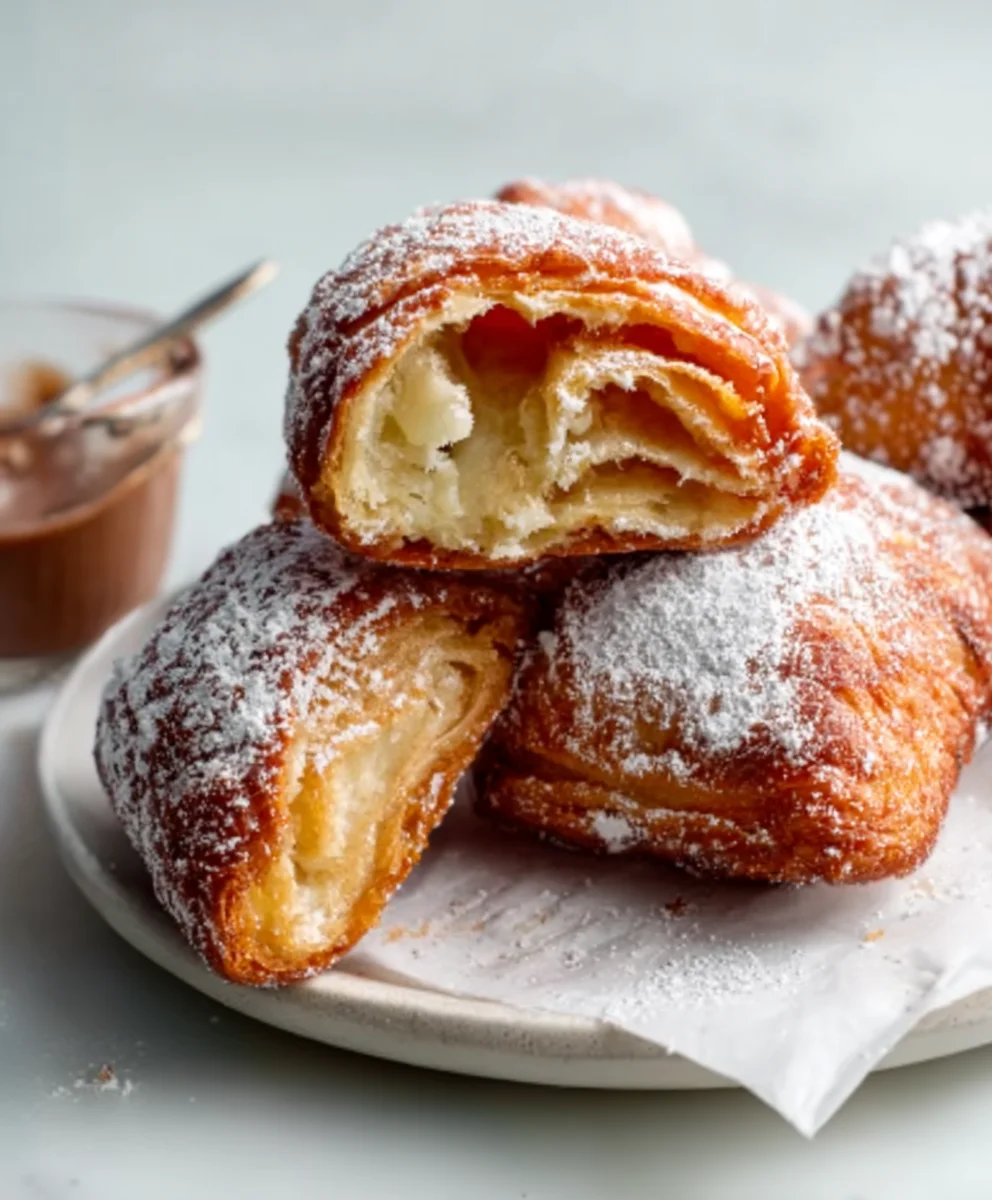
Fried Croissant Beignets are the ultimate indulgence, a delightful fusion that takes the beloved, buttery layers of a croissant and transforms them into pillowy, fried pockets of pure bliss. Have you ever dreamt of a treat that’s both elegant and comforting, crispy on the outside and impossibly soft within? That’s exactly what these fried croissant beignets deliver. People absolutely adore them because they capture the essence of classic beignets – that irresistible dusting of powdered sugar and the airy, melt-in-your-mouth texture – but with the sophisticated, flaky foundation of a croissant. What truly sets these fried croissant beignets apart is the unique textural contrast. You get that initial satisfying crunch, followed by the airy, slightly chewy interior that’s a testament to the lamination within. It’s a decadent experience that feels both familiar and excitingly new, perfect for a special brunch or a late-night craving.

Ingredients:
- 60 ml (1/4 cup) milk, lukewarm
- 120 ml (1/2 cup) water, lukewarm
- 21 g (2 tbsp 1 tsp) active dry yeast
- 50 g (1/4 cup) granulated sugar, for the dough
- 550 g (4 1/2 cups) Manitoba flour (or good quality bread flour)
- 2 large eggs
- 1 egg yolk
- 1 tbsp rum extract extract (optional, but highly recommended for an extra layer of flavor)
- 5 g (3/4 tsp) salt
- 70 g (1/3 cup) unsalted butter, softened
- 750 ml (3 1/2 cups) vegetable oil, for frying
- 80 g (1/3 cup) granulated sugar, for coating
- 40 g (1/3 cup) powdered sugar, for dusting
- 1 tsp cinnamon powder
- 350 g (12 oz) Chocolate Spread (Lino Lada or your favorite chocolate hazelnut spread)
Preparing the Dough: The Foundation of Your Fried Croissant Beignets
The journey to creating these delightful Fried Croissant Beignets begin extracts with a rich, eggy dough, similar to brioche but with a touch more structure. This ensures they hold their shape beautifully as they fry. First, in a large mixing bowl or the bowl of your stand mixer fitted with a dough hook, combine the lukewarm milk and lukewarm water. Sprinkle the active dry yeast over the liquid and let it sit for about 5-10 minutes until it becomes foamy. This step, known as “blooming” the yeast, is crucial to ensure your yeast is alive and ready to work its magic. Once foamy, stir in the 50g of granulated sugar until mostly dissolved.
Next, add the Manitoba flour (or bread flour) to the yeast mixture. Then, in a separate small bowl, whisk together the two large eggs and the single egg yolk. Add these whisked eggs to the flour mixture, along wrum extract the rum extract (if using) and the salt.
Now, it’s time to bring it all together. If you’re using a stand mixer, start on a low speed and mix until a shaggy dough forms. If mixing by hand, use a sturdy spoon or your hands to incorporate all the ingredients. Continue mixing or kneading for about 5-7 minutes until the dough starts to come together. At this stage, it will still be a bit sticky and rough.
Developing the Dough: The Richness of Butter
This is where the magic truly happens and elevates our Fried Croissant Beignets from good to extraordinary. Gradually add the softened unsalted butter, a tablespoon at a time, to the dough. Continue to mix or knead. The dough will initially seem like it’s breaking down as the butter is incorporated, but keep going! As you continue to knead (either in the stand mixer on medium speed or by hand), the dough will become incredibly smooth, elastic, and pliable. This process can take another 10-15 minutes. The goal is a dough that is soft, slightly sticky but manageable, and can be stretched thin without tearing easily. It should feel luxurious and well-hydrated.
Once your dough has reached this perfect, elastic consistency, shape it into a ball. Lightly grease the mixing bowl with a little oil or cooking spray. Place the dough ball into the greased bowl, turning it once to coat all sides. Cover the bowl tightly with plastic wrap or a clean kitchen towel. Place the bowl in a warm, draft-free place to rise for about 1 to 1.5 hours, or until it has doubled in size. A slightly warm oven (turned off, with the light on) is often an ideal spot for this.
Shaping and Second Rise: The Croissant-Like Layers
After the dough has beautifully risen, gently punch it down to release the air. Turn the dough out onto a lightly floured surface. At this point, you have a few options for shaping. For traditional beignet shapes, you can roll the dough into a large rectangle, about 1 inch thick, and cut it into squares or rectangles. For a more “croissant” like effect, you can roll the dough thinner (about 1/2 inch thick) and cut it into smaller triangles or diamond shapes.
Once cut, arrange the dough pieces on parchment-lined baking sheets, leaving a little space between each one. Cover them loosely with plastic wrap or a kitchen towel and let them rest for a second, shorter rise, for about 30-45 minutes. They won’t necessarily double again, but they should look noticeably puffy. This second rise is important for achieving a light and airy texture. While they are resting, prepare your frying station.
Frying to Golden Perfection: The Crispy Exterior
This is the most exciting part! Pour the vegetable oil into a heavy-bottomed pot or Dutch oven, ensuring it’s deep enough to submerge the dough pieces. Heat the oil over medium-high heat until it reaches about 175-180°C (350-360°F). It’s important to maintain this temperature throughout the frying process; too hot and they’ll burn on the outside before cooking through, too cool and they’ll be greasy. You can test the temperature by dropping a tiny piece of dough into the oil; it should sizzle immediately and float to the surface.
Carefully add a few dough pieces to the hot oil, being careful not to overcrowd the pot. Overcrowding will lower the oil temperature and result in unevenly cooked beignets. Fry the beignets for about 2-3 minutes per side, or until they are a deep golden brown. Use a slotted spoon or spider strainer to gently turn them and to remove them from the oil once they are perfectly cooked. Place the fried beignets on a wire rack set over a baking sheet lined with paper towels to drain off any excess oil. This is a crucial step to prevent them from becoming soggy.
The Sweet Finish: Filling and Coating
While the beignets are still warm and slightly puffed, it’s time for the glorious filling and coating. In a shallow dish or a wide, shallow bowl, combine the 80g of granulated sugar and the 1 tsp of cinnamon powder. Mix them together thoroughly. This will be your cinnamon-sugar coating.
For the filling, you can use a piping bag fitted with a small, long tip. Carefully insert the tip into the side of each warm beignet and gently fill it with the Chocolate Spread. Don’t overfill, or the chocolate will ooze out too much. Aim for a generous dollop inside each one.
Once filled, roll the warm, chocolate-filled beignets in the cinnamon-sugar mixture, coating all sides. The warmth of the beignet will help the sugar adhere beautifully. Finally, for an extra touch of sweetness and visual appeal, lightly dust the finished Fried Croissant Beignets with powdered sugar. Serve them immediately while they are still warm and delightfully gooey inside. Enjoy the incredible contrast of the crisp exterior, the airy interior, and the luscious chocolate filling!
Conclusion:
And there you have it – your guide to creating delectable Fried Croissant Beignets! We’ve walked through the simple steps to transform leftover croissants into these wonderfully light, airy, and irresistibly sweet treats. The satisfying crunch of the golden-brown exterior giving way to the soft, flaky interior is pure bliss. These Fried Croissant Beignets are perfect for a special brunch, an afternoon pick-me-up, or even a delightful dessert. Don’t be afraid to get creative with your toppings and glazes – the possibilities are endless!
Serve these warm and fresh, dusted with powdered sugar, drizzled with chocolate sauce, or accompanied by a fresh fruit compote. For a truly indulgent experience, try a dollop of whipped cream or a scoop of your favorite ice cream alongside. Remember, the beauty of this recipe lies in its adaptability. Feel free to experiment with different spices like cinnamon or nutmeg in the dough, or add a touch of citrus zest for brightness.
I truly hope you enjoy making and, more importantly, devouring these Fried Croissant Beignets. They are a testament to how simple ingredients can create something truly extraordinary. So gather your croissants, embrace the fun of frying, and savor every bite!
Frequently Asked Questions:
What kind of croissants work best for Fried Croissant Beignets?
Day-old or slightly stnon-alcoholic ale croissants work wonderfully. They tend to hold their shape better during the frying process and absorb the flavors more effectively. Fresh croissants can sometimes be too soft and may crum extractble when cut or fried.
Can I make the Fried Croissant Beignets ahead of time?
While they are best enjoyed fresh out of the fryer, you can prepare the croissant pieces and store them in an airtight container in the refrigerator for a few hours before frying. However, for optimal crispiness and texture, frying them just before serving is highly recommended.
What are some other topping ideas for Fried Croissant Beignets?
Beyond powdered sugar and chocolate sauce, consider a caramel drizzle, a sprinkle of toasted nuts (like almonds or pecans), a light dusting of cinnamon sugar, or even a tangy lemon glaze. For a savory twist, you could even try a light dusting of sea salt and a drizzle of honey.
Fried Croissant Beignets-Easy Sweet Treat
Delightful beignets with a croissant-like texture, fried to golden perfection and filled with chocolate spread. An easy and sweet treat.
Ingredients
-
60 ml (1/4 cup) milk, lukewarm
-
120 ml (1/2 cup) water, lukewarm
-
21 g (2 tbsp 1 tsp) active dry yeast
-
50 g (1/4 cup) granulated sugar, for the dough
-
550 g (4 1/2 cups) Manitoba flour (or good quality bread flour)
-
2 large eggs
-
1 egg yolk
-
1 tbsp rum extract (optional, substitute with 1 tsp vanilla extract)
-
5 g (3/4 tsp) salt
-
70 g (1/3 cup) unsalted butter, softened
-
750 ml (3 1/2 cups) vegetable oil, for frying
-
80 g (1/3 cup) granulated sugar, for coating
-
40 g (1/3 cup) powdered sugar, for dusting
-
1 tsp cinnamon powder
-
350 g (12 oz) Chocolate Spread (Lino Lada or your favorite chocolate hazelnut spread)
Instructions
-
Step 1
In a large bowl, combine lukewarm milk and water. Sprinkle yeast over the liquid and let sit for 5-10 minutes until foamy. Stir in 50g granulated sugar until dissolved. -
Step 2
Add flour, whisked eggs, egg yolk, rum extract (or vanilla), and salt to the yeast mixture. Mix until a shaggy dough forms, then knead for 5-7 minutes until it starts to come together. -
Step 3
Gradually add softened butter, a tablespoon at a time, kneading for another 10-15 minutes until the dough is smooth, elastic, and pliable. Shape into a ball, place in a greased bowl, cover, and let rise in a warm place for 1 to 1.5 hours, or until doubled. -
Step 4
Punch down the dough, turn onto a floured surface, and shape into desired beignet pieces (squares, rectangles, triangles, or diamonds). Arrange on parchment-lined baking sheets, cover loosely, and let rest for 30-45 minutes until puffy. -
Step 5
Heat vegetable oil in a heavy-bottomed pot to 175-180°C (350-360°F). Carefully fry beignet pieces for 2-3 minutes per side until golden brown, avoiding overcrowding. Remove with a slotted spoon and drain on a wire rack set over paper towels. -
Step 6
In a shallow dish, combine 80g granulated sugar and cinnamon powder. For filling, use a piping bag to inject chocolate spread into each warm beignet. Roll the filled beignets in the cinnamon-sugar mixture. Dust with powdered sugar and serve warm.
Important Information
Nutrition Facts (Per Serving)
It is important to consider this information as approximate and not to use it as definitive health advice.
Allergy Information
Please check ingredients for potential allergens and consult a health professional if in doubt.