Daisy Lemon Meringue Pie Recipe-Sweet Tart Perfection
Daisy Lemon Meringue Pies are more than just a dessert; they’re a sunbeam on a plate, a little burst of pure joy that brightens any occasion. There’s something undeniably magical about that perfect balance – the tangy, zesty lemon filling, the cloud-like, sweet meringue topping, all nestled in a crisp, buttery crust. It’s a classic for a reason, beloved by generations for its comforting familiarity and its utterly delightful taste. What truly makes a Daisy Lemon Meringue Pie special is the sheer visual appeal combined with that irresistible flavor profile. It’s a showstopper that’s surprisingly achievable in your own kitchen, a testament to simple ingredients creating something truly extraordinary. Get ready to create your own piece of sunshine with this delightful recipe.
Your Ultimate Guide to Crafting the Perfect Daisy Lemon Meringue Pie
Let’s bake some happiness!
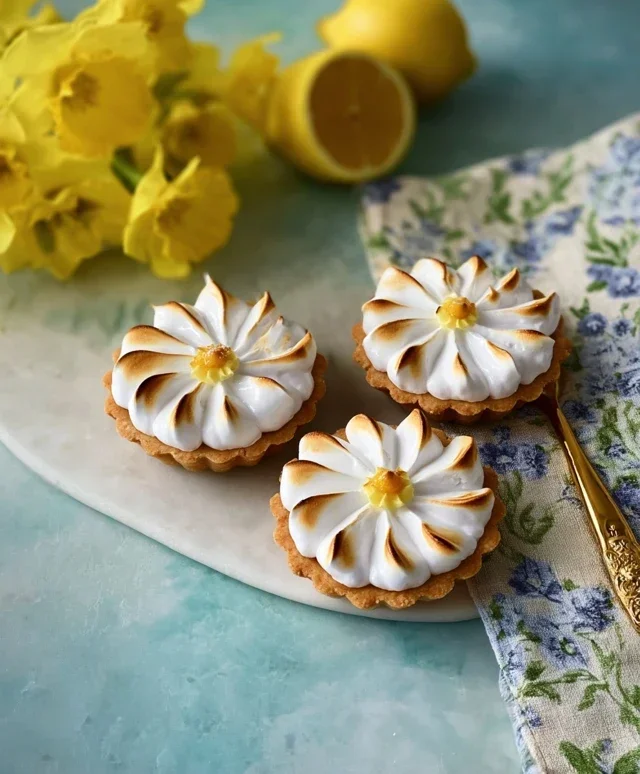
Daisy Lemon Meringue Pies
There’s something truly magical about a classic lemon meringue pie. The tangy, vibrant lemon filling, the crisp, buttery crust, and that ethereal cloud of sweet meringue – it’s a dessert that sings of sunshine and happy occasions. And while it might sound intimidating, making these Daisy Lemon Meringue Pies from scratch is surprisingly achievable and incredibly rewarding. Today, we’re going to guide you through creating individual, delightful daisy-shaped lemon meringue pies that are perfect for sharing, or for indulgin extractg in a little personal treat. The delicate daisy shape adds an extra touch of charm, making them visually stunning as well as delicious. Get ready to impress your friends and family with this showstopper!
Ingredients:
Preparing the Daisy Pie Crusts
We’ll start by crafting our beautiful, buttery pastry bases. It’s important to keep the butter cold for a flaky crust, so don’t be tempted to let it soften too much.
1. In a medium bowl, combine the 125g plain flour and 35g icing sugar. Whisk them together briefly to ensure they are evenly distributed. This forms the dry base for our pastry.
2. Add the 60g cold unsalted butter, cut into small cubes, to the flour and sugar mixture. Using your fingertips, or a pastry blender, rub the butter into the dry ingredients until the mixture resembles coarse breadcrum extractbs. You want to see small pieces of butter still visible; these are what will create the lovely flakiness in our crust. Avoid overworking the dough at this stage, as this can make the pastry tough.
3. In a small cup, lightly whisk together the 1 large egg yolk and 1 tbsp water. Make a well in the center of your flour and butter mixture and pour in the egg yolk mixture.
4. Using a knife, gently bring the dough together, cutting and folding until it just starts to form a cohesive ball. Be careful not to overmix. If the dough seems too dry and isn’t coming together, you can add another teaspoon of cold water, a tiny bit at a time.
5. Turn the dough out onto a lightly floured surface and gently shape it into a disc. Wrap it tightly in cling film and refrigerate for at least 30 minutes. This chilling period is crucial as it allows the gluten to relax and the butter to firm up, making the dough easier to roll and preventing shrinkage during baking.
Shaping and Blind Baking the Daisy Crusts
Now for the fun part – shaping our daisy petals!
1. Preheat your oven to 190°C (170°C fan/Gas Mark 5). Lightly grease and flour 6 individual tart tins (about 10cm in diameter).
2. Remove the chilled dough from the refrigerator. On a lightly floured surface, roll out the dough to about 3mm thickness. You want it thin enough to be delicate but not so thin that it tears easily.
3. Using a daisy-shaped cookie cutter (or a round cutter and then carefully shaping the petals), cut out 6 daisy shapes for the bases of your pies. You may need to re-roll scraps of dough to get all 6.
4. Carefully press each daisy shape into the prepared tart tins, gently pressing the edges up the sides. Trim any excess dough.
5. Prick the base of each pastry shell several times with a fork. This will prevent the pastry from puffing up too much during baking.
6. Line each pastry shell with a piece of baking parchment and fill with baking beans or uncooked rice. This process, known as blind baking, helps to ensure a crisp and golden crust.
7. Bake for 15 minutes, then carefully remove the parchment and baking beans. Return the tart shells to the oven for another 5-7 minutes, or until they are lightly golden brown and appear dry. Let them cool completely in their tins on a wire rack.
Crafting the Tangy Lemon Filling
This vibrant lemon filling is what dreams are made of. It’s zesty, sweet, and utterly delicious.
1. In a medium saucepan, whisk together the 4 large egg yolks, 250g granulated sugar, and 60g cornflour. Ensure there are no lumps of cornflour.
2. Gradually whisk in the 300ml water until smooth.
3. Place the saucepan over medium heat. Stir continuously until the mixture thickens to a pudding-like consistency and comes to a gentle boil. It’s important to keep stirring to prevent lumps forming and to ensure the cornflour cooks through. Allow it to bubble gently for about 1 minute.
4. Remove the saucepan from the heat. Stir in the 120ml fresh lemon juice and the zest of 2 lemons. The aroma at this stage is incredible!
5. Add the 50g unsalted butter, cubed, to the warm lemon mixture. Stir until the butter is completely melted and incorporated, giving the filling a lovely sheen and richness.
6. Pour the lemon filling evenly into the cooled, baked pastry shells. Smooth the tops with a spatula.
Whipping Up the Meringue Cloud
The meringue is the crowning glory of our lemon meringue pies. We’re aiming for a soft, billowy cloud.
1. Ensure your mixing bowl and whisk are perfectly clean and free from any grease. This is vital for the egg whites to whip up properly.
2. Place the 4 large egg whites in the clean bowl. Add the 1 tsp white vinegar. The vinegar helps to stabilize the meringue.
3. Begin extract whisking the egg whites on a medium speed until they form soft peaks. This means when you lift the whisk, the egg white holds its shape but the tip curls over.
4. Gradually add the 200g granulated sugar, a tablespoon at a time, while continuing to whisk on a medium-high speed. Be patient, and allow each addition of sugar to dissolve before adding more. This process can take several minutes.
5. Continue whisking until the meringue is thick, glossy, and stiff peaks form. When you lift the whisk, the meringue should stand straight up. You can test if the sugar has dissolved by rubbing a little meringue between your fingers; it should feel smooth, not gritty.
6. Gently fold in the 1 tsp vanilla extract.
Assembling and Finishing Your Daisy Pies
The final steps to bring our beautiful creations to life.
1. Spoon or pipe the meringue generously over the lemon filling in each tart shell. Ensure the meringue touches the edges of the pastry crust all the way around. This creates a seal, preventing the meringue from shrinking away from the sides. You can create swirls and peaks with your spoon or piping bag for a decorative effect.
2. For that characteristic browned meringue finish, you have two options. You can place the pies under a preheated broiler (grill) for a minute or two, watching them very carefully as they can burn quickly, until the peaks are golden brown. Alternatively, you can bake them in a preheated oven at 170°C (150°C fan/Gas Mark 3) for about 15-20 minutes, or until the meringue is golden brown and the filling is set.
3. Once beautifully browned, remove the pies from the oven and let them cool completely on a wire rack. This allows the filling to fully set.
4. Once cool, you can carefully remove them from their tart tins. Serve your exquisite Daisy Lemon Meringue Pies chilled. Enjoy every tangy, sweet, and buttery bite!
Conclusion:
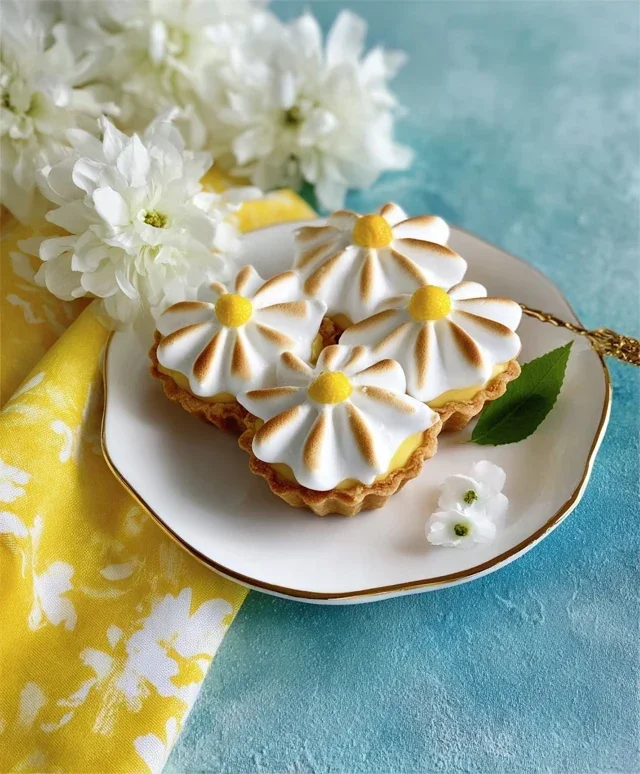
So there you have it – our delightful recipe for Daisy Lemon Meringue Pies! This recipe is a true winner because it strikes a perfect balance between tart, tangy lemon curd and a sweet, cloud-like meringue, all nestled in a crisp, buttery crust. The visual appeal, with those peaks of golden meringue, makes it a showstopper for any occasion. It’s wonderfully versatile and guaranteed to impress your friends and family with its vibrant flavor and elegant presentation. Don’t hesitate to give this Daisy Lemon Meringue Pie a try; I’m confident you’ll fall in love with every bite!
For serving, these pies are absolutely divine on their own, allowing the pure lemon and meringue flavors to shine. However, a dollop of fresh whipped cream or a scattering of fresh berries can add an extra layer of deliciousness. If you’re feeling adventurous with variations, consider adding a hint of lemon zest to the crust for an extra citrus punch, or experiment with a flavored meringue, like a touch of vanilla bean or almond extract.
Frequently Asked Questions:
Why is my meringue weeping?
Meringue weeping, or the formation of liquid beads on the surface, often happens due to undissolved sugar or moisture in the air. Ensure your sugar is fully dissolved into the egg whites before you start whipping to stiff peaks. Also, try to make your meringue on a dry day if possible!
Can I make the lemon curd ahead of time?
Absolutely! The lemon curd can be made up to 2 days in advance and stored in an airtight container in the refrigerator. This makes assembling your Daisy Lemon Meringue Pies even quicker and easier when you’re ready to bake.
How do I store leftover pie?
Leftover Daisy Lemon Meringue Pie is best stored loosely covered in the refrigerator. This helps prevent the meringue from becoming soggy. It’s generally best enjoyed within 1-2 days for optimal texture and flavor.
Daisy Lemon Meringue Pies
Delicate individual lemon meringue pies with a buttery shortcrust pastry and a vibrant lemon filling, topped with fluffy meringue.
Ingredients
-
125g plain flour
-
35g icing sugar
-
60g cold unsalted butter
-
1 large egg yolk
-
1 tbsp water
-
150g caster sugar (for lemon filling)
-
40g cornflour (for lemon filling)
-
200ml water (for lemon filling)
-
4 large egg whites (for meringue)
-
200g caster sugar (for meringue)
Instructions
-
Step 1
For the pastry: Whisk together the plain flour and icing sugar in a bowl. Rub in the cold butter until the mixture resembles breadcrumbs. -
Step 2
Add the egg yolk and water, and mix to form a firm dough. Wrap in cling film and chill for at least 30 minutes. -
Step 3
Preheat oven to 190°C (170°C fan/Gas Mark 5). Roll out the chilled pastry and line four 10cm tart tins. Prick the bases with a fork. -
Step 4
Bake the pastry cases for 10-12 minutes until lightly golden. Allow to cool completely. -
Step 5
For the lemon filling: Mix the caster sugar and cornflour in a saucepan. Gradually whisk in the water until smooth. Bring to a simmer, stirring constantly, until thickened. Remove from heat, stir in lemon zest and juice. Pour into cooled pastry cases. -
Step 6
For the meringue: Whisk the egg whites in a clean, dry bowl until stiff peaks form. Gradually whisk in the caster sugar, a tablespoon at a time, until the meringue is stiff and glossy. -
Step 7
Spoon or pipe the meringue over the lemon filling, ensuring it covers the edges to seal. Brown the meringue under a hot grill or in the oven for 2-3 minutes until golden.
Important Information
Nutrition Facts (Per Serving)
It is important to consider this information as approximate and not to use it as definitive health advice.
Allergy Information
Please check ingredients for potential allergens and consult a health professional if in doubt.